TEFCA and FHIR integration
FHIR R4 servers and APIs, SMART on FHIR app launch, QHIN connectivity under TEFCA and USCDI mapping for payers, providers and health tech vendors.
Health information exchange in the United States rests on three pieces. FHIR R4 is the API and data model. USCDI lists the data classes certified systems must exchange, and US Core maps them onto FHIR resources. TEFCA lets you query organizations you have no contract with, through a Qualified Health Information Network (QHIN).
Interoperability work
-
FHIR server development
Strict FHIR R4 servers with US Core 6.1.0, CARIN BB and Da Vinci implementation guides.
-
SMART on FHIR
Version 2.1 app launch with PKCE and asymmetric client credentials; scopes checked at every endpoint.
-
TEFCA and QHIN connectivity
Patient discovery and document query through one adapter per QHIN partner.
-
USCDI mapping
USCDI v3 data classes mapped from vendor exports, with a terminology service for LOINC, SNOMED CT, RxNorm and ICD-10.
-
Bulk Data jobs
Population-level $export and $import on checkpointed background jobs.
-
Consent-scoped audit
Each read and write linked to the Consent resource that allowed it, in a hash-linked chain.
Exchange platforms in production
-
 FHIR · TEFCA · USCDI integration
External info-blocking review of our FHIR platform asked for no changes. The server has 42 resource providers, and adding a TEFCA partner means one new row in a configuration registry.
-
 HIPAA audited file proxy
Download links from our HIPAA file proxy are valid for one document, one recipient and one time window. Its first external HIPAA security audit passed with no remediation.
-
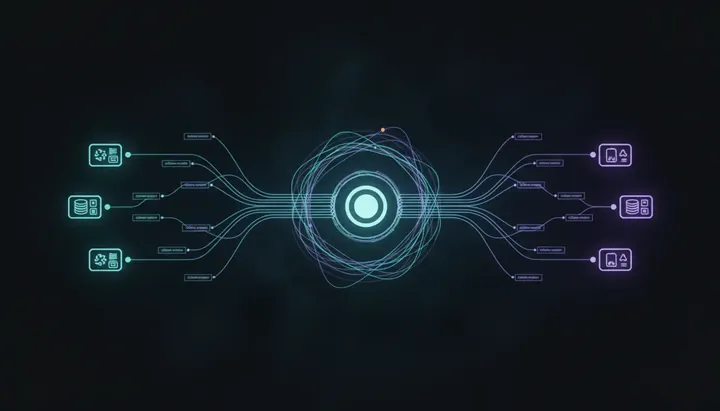 Clinical data aggregation hub
Consumers of our aggregation hub read many clinical sources through one contract, and every request they make is logged for audit.
Work happens under your BAA. Put any info-blocking review or QHIN go-live date in the brief; it sets the schedule.
How an exchange project starts
-
Scope the exchange
Endpoints, partners, USCDI data classes and any review or go-live date.
-
Specification review
We read your conformance statement and the partner specifications and write a plan with the risks of each module.
-
Conformance before partners
Profiles and terminology pass validation before the first partner connection opens.
And much more. Ask about your project
Common questions
What is TEFCA?
Do we need a FHIR API if we connect through TEFCA?
What does SMART on FHIR add to a FHIR server?
Further reading in Insights


Is a QHIN go-live or an info-blocking review coming up?
Send the date, the exchange partners and the data classes in scope.