Healthcare schema markup is structured data, JSON-LD blocks using schema.org medical types, that tells search engines what a clinical page actually is: a clinic location, a physician profile, a procedure page, a set of answered questions. Implemented precisely, it earns the rich-result formats generic templates never see: profile panels, FAQ expansions, local result enrichment. Implemented loosely, it does nothing, silently.
The gap is measurable and common. When we audited the clinical sites behind our healthcare SEO program, doctor and service pages carried no structured data at all, multilingual content had no hreflang, and Search Console was uninstrumented; ranking-relevant signals were leaking on every audit while the growth team inferred performance from third-party keyword tools. The remediation was not exotic: a small set of types, applied precisely, validated continuously. This article is that playbook.
Why clinical sites leak visibility
Clinical sites are usually built on generic templates, and generic templates describe nothing. A physician profile page renders a name, a photo, and credentials as anonymous HTML; the search engine sees a page, not a physician. Multiply by every doctor, location, and service page, and the site has hundreds of opportunities to be understood, all declined.
The leak matters more in healthcare than elsewhere for two reasons. Health queries are heavily local and heavily entity-shaped, people search for a clinic near them or a named specialist, exactly the query types where structured data feeds the result format. And health content faces elevated quality scrutiny, so unambiguous machine-readable identity (this is a licensed clinic, this is a physician with these credentials) is signal a clinical site cannot afford to withhold.
The type map: which schema where
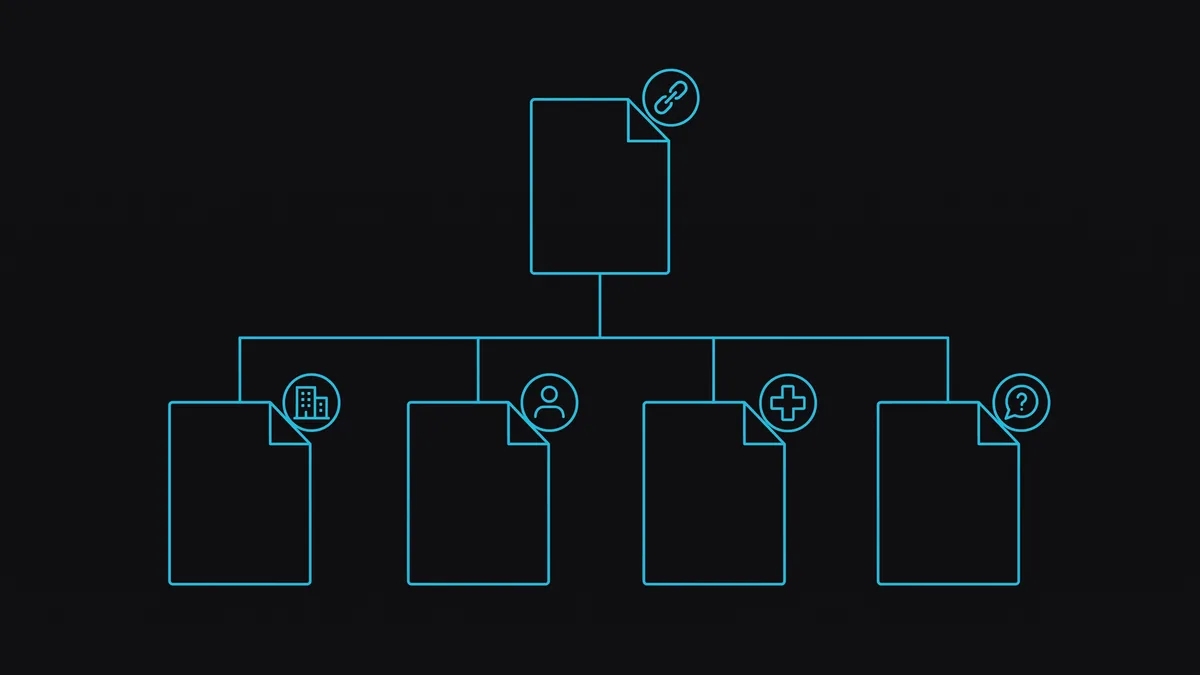
A short list of types does almost all the work. The discipline is placement: one page, one primary type, mirroring what the page actually is.
| Page | Primary type | Properties that earn their keep |
|---|---|---|
| Location page | MedicalClinic | name, address, geo, openingHours, telephone, medicalSpecialty |
| Doctor profile | Physician | name, medicalSpecialty, memberOf, image, worksFor |
| Service / treatment page | MedicalProcedure or Service | name, description, provider linkage |
| Question sections | FAQPage | real questions the page visibly answers |
| Interior pages | BreadcrumbList | the actual navigation path |
| Site-wide | Organization or MedicalOrganization | declared once, referenced by @id everywhere else |
Precision beats coverage everywhere in this table. FAQPage on content that is not visibly question-and-answer invites manual action, not rich results. A MedicalProcedure block on a thin marketing page describes content that is not there. The markup is a claim about the page; search engines increasingly check the claim.
Implementation details that matter
Generate from data, never by hand. Hand-written JSON-LD drifts from page content the first time an editor renames a doctor. Markup should render from the same records that render the page, the doctor profile database emits both the HTML and the Physician block, so they cannot disagree. This is the single decision that separates markup that survives from markup that rots.
Declare the organization once, reference it everywhere. One Organization node with an @id, then provider, worksFor, and publisher references pointing at it from every other block. Re-declaring the organization on every page produces conflicting duplicates that dilute the entity you are trying to establish. This site practices what it preaches: every case and article page here references one organization node by @id.
Keep required properties complete. A MedicalClinic without an address or a Physician without a specialty is a parsed-and-ignored block: validators accept it, rich results skip it. The properties search engines surface, hours, geo, specialty, telephone, are exactly the ones templates most often omit.
Mind the platform basics underneath. Structured data rides on a page that must itself be sound: crawlable, canonical, fast. Core Web Vitals discipline (LCP under 2.5 seconds, INP under 200 milliseconds) came bundled with markup in our program for a reason, a rich result pointing at a slow page wins the click and loses the visit. On multi-location platforms the markup layer also has to scale structurally, which is a platform decision: our multi-clinic web platform emits per-location markup from one shared codebase, so fifty locations mean fifty correct MedicalClinic blocks, not fifty hand-maintained ones.
Multilingual sites and hreflang
Clinical sites serving multilingual populations add a second structured layer: hreflang, the annotations that tell search engines which language variant serves which audience. The rule is strict bidirectionality: every variant declares itself and all its siblings, and every sibling declares it back. Asymmetric annotations are discarded wholesale, silently, and the failure mode is concrete: the wrong-language page ranking in the wrong region, and a patient landing mid-site in a language they cannot read.
The pages behind the annotations matter as much as the annotations. Machine-translated medical content is clinically unreliable and reads that way; the platforms we build, like the multilingual clinic platform serving Polish, Ukrainian, and Russian, use native medical terminology curated by clinical staff, with language persisting through the whole booking flow. hreflang earns the right visitor; the content quality decides whether they stay.
Validating at scale
Manual spot checks stop working somewhere around a few dozen pages, and clinical sites pass that immediately. Validation has to be continuous and mechanical: parse every page's JSON-LD in CI, assert required properties per type, and fail the build on regressions. Markup generated from data plus validation in CI means an editor's change cannot silently break structured data anywhere on the site.
The measurement loop closes in Search Console: instrumented properly, it reports which pages hold rich results and surfaces enhancement errors as they appear, so a drop is an alert, not a quarterly discovery. That instrumentation, clean platform signal instead of inference from third-party tools, was half the value of the program in practice.
Schema markup is the rare SEO work with a stable contract: describe the page truthfully in the vocabulary the search engine reads, and the benefit persists across algorithm updates because it was never a trick. The same truthful-description discipline runs through the interoperability standards on the clinical data side, TEFCA and FHIR, USCDI and US Core, and through everything else our healthcare practice builds.
Common questions
Which schema.org types apply to a clinic site?
A short list does most of the work: MedicalClinic for locations, Physician for doctor profiles, MedicalProcedure or Service for treatment pages, FAQPage where real questions are answered, and BreadcrumbList everywhere interior. Precision beats coverage: one correct type per page outperforms a pile of loosely applied ones.
Does schema markup improve rankings directly?
It improves how results render, rich snippets, profile panels, FAQ expansions, which improves clickthrough, which is the lever you actually control. Treating markup as a rendering contract with the search engine, rather than a ranking trick, is also why it keeps working after algorithm updates.
How should multilingual clinic sites handle hreflang?
Every language variant declares itself and all its siblings, bidirectionally, with a self-reference. Partial hreflang is worse than none: search engines that find asymmetric annotations discard the whole set, and the wrong-language page starts ranking in the wrong region.
How do you validate structured data at scale?
Generate markup from data, not by hand, then validate in CI: parse every page's JSON-LD, assert required properties per type, and diff against the schema.org vocabulary. Manual spot checks catch nothing once the site passes a few dozen pages; in our SEO program work validation runs on every release.
We built this in production
Healthcare SEO program
Technical SEO program for clinical sites. JSON-LD schema markup for MedicalClinic, Physician, Service, and MedicalProcedure, Core Web Vitals optimization, hreflang for multilingual content, and GSC instrumentation that s...
Multi-clinic web platform
Multi-tenant Next.js framework that launches ADA-compliant, HIPAA-aware clinic websites from one shared codebase. Each location gets its own subdomain, branded theme, appointment widgets, and secure intake forms without ...
Multilingual clinic platform
Multilingual web platform for a private multi-location medical center serving the Eastern European diaspora. i18n routing in Polish, Ukrainian, and Russian, a multi-step appointment wizard wired to an external booking AP...
Keep reading
TEFCA vs FHIR: what each one actually does
TEFCA is a trust framework for network exchange, FHIR is the API standard the data rides on. How they differ, where they meet, and what you build for each.
USCDI and FHIR: data classes vs the API that moves them
USCDI defines which data elements must be exchangeable, US Core maps them onto FHIR R4 resources. The versions, the mapping, and the gaps engineers hit.
This is the standards side of what we do. The engineering practice behind it, HEDIS pipelines, FHIR platforms, and clinical document systems built under BAA, lives on the healthcare integration page.
Working on something in this space?
Describe the system and the standard you are up against. The engineer who answers is the engineer who ships it.